
Decks
Deck Building on Cape Cod: Composite vs. Pressure-Treated and What Affects the Cost
Composite, pressure-treated or cedar? How each holds up to Cape Cod salt air and winters, what moves the cost up front and over time, and what drives TimberTech pricing.
By Murray Construction · October 27, 2026
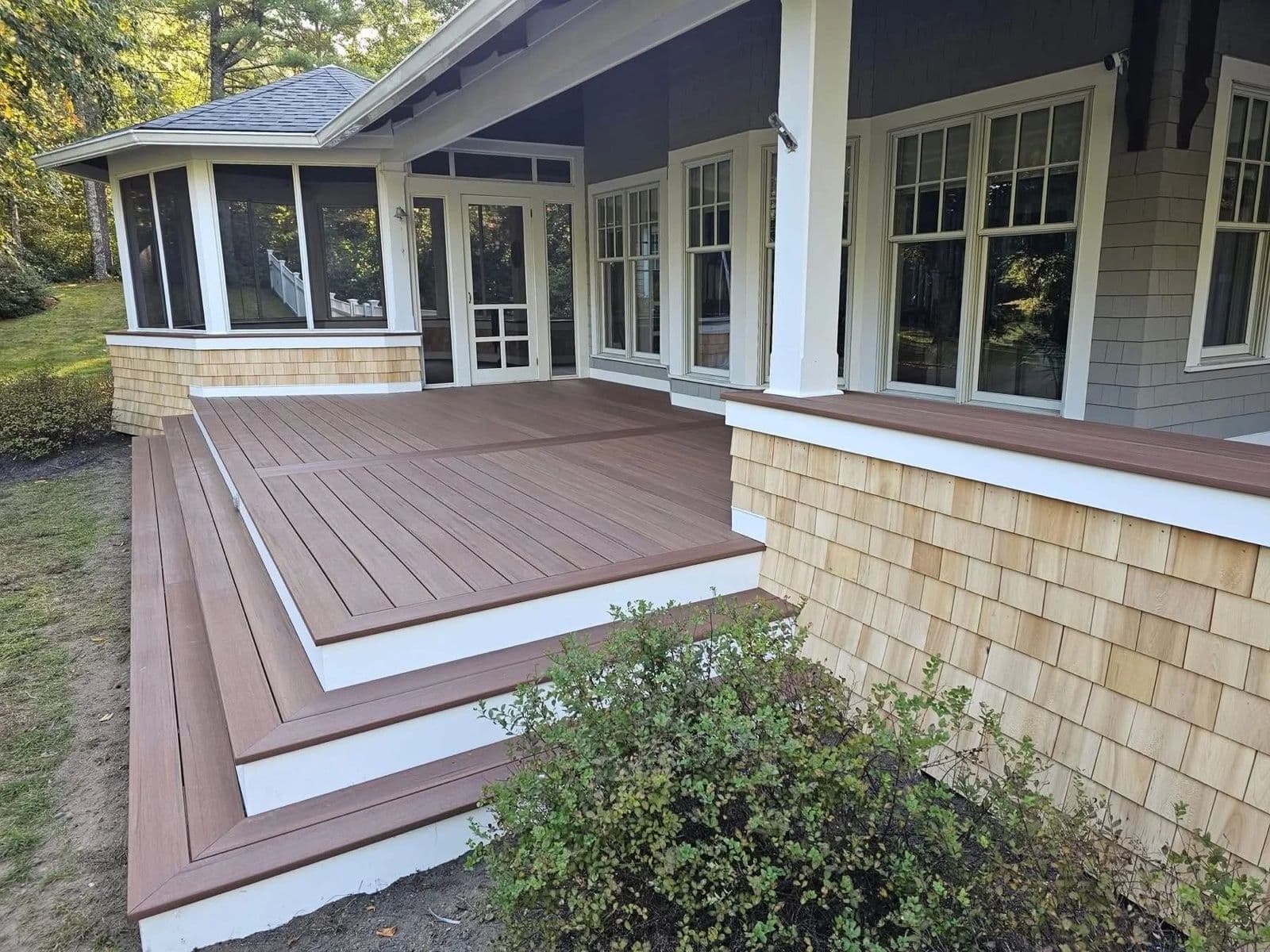
Composite decking on Cape Cod has gone from a premium upgrade to the material many homeowners ask about first. That makes sense: salt air, wind-driven rain and freeze-thaw winters are hard on bare wood. Pressure-treated lumber still has its place, though, and cedar has its fans. This guide lays the three side by side, explains what moves the cost of each, and walks through what drives TimberTech pricing, so you can sit down to a quote knowing what you are choosing.
Is composite decking worth it on Cape Cod?
Usually, yes, if you plan to keep the house for a while and would rather not clean, stain and seal every year or two. Composite costs more up front than pressure-treated wood, but it resists rot, splintering and moisture damage, and that matters in a damp, salty place like this.
The closer you are to the water, the stronger the case. Boards on a deck facing Buzzards Bay or Cape Cod Bay take a steady dose of salt spray, sun and wind. Wood can handle that only if someone keeps up the finish, and on a seasonal home that sits empty all winter, the upkeep is usually the first thing to slip.
If you are selling soon or working to a tight budget, a well-built pressure-treated deck is still a sensible choice.
Composite decking vs. pressure-treated on Cape Cod: what is the real difference?
Pressure-treated decking is softwood lumber, usually southern yellow pine, soaked with preservatives that hold off rot and insects. Composite is a manufactured board of wood fibers and recycled plastic, wrapped in a protective shell. Wood is cheaper and familiar. Composite asks more money at the start and far less work afterward.
- Maintenance. Pressure-treated boards need regular cleaning and a stain or sealer every few years to stay sound. Composite generally needs soap, water and a brush.
- Surface wear. Wood checks, cracks, cups and splinters as it goes through wet and dry cycles; think of cupped boards on a north-facing deck that never fully dries. Capped composite resists that movement, which bare feet and pets appreciate.
- Appearance over time. Untreated wood weathers to gray, and some people love that look on a shingled Cape. Composite holds its color much longer, though no material is fully fade-proof.
- Framing. This is the part people forget. Most composite decks still sit on a pressure-treated wood frame. The boards you walk on change; the structure underneath is usually the same lumber.
So the framing, footings and ledger deserve a close look before anyone prices new boards, and John will look at all three when he visits. A great board on a tired frame is still a tired deck.
Where does cedar fit in?
Cedar is the third option people weigh, and it suits a traditional Cape house. It resists rot and insects naturally, smells great and weathers to a soft silver. It is also soft enough to dent under a dropped grill lid, and keeping its color means regular cleaning and resealing.
It usually costs more than pressure-treated lumber without giving you composite's low upkeep. People who choose cedar choose it for the look and accept the maintenance that comes with it.
How does Cape Cod weather affect your decking choice?
Weather here rewards materials that shed water and shrug off salt. Nor'easters push rain sideways, salt settles on every surface, and freeze-thaw cycles work moisture into any crack. Composite and PVC handle this with little care. Wood handles it well only when the finish is kept up.
- Salt exposure. TimberTech states its decking is engineered to resist salt air and water, and that its fully synthetic Advanced PVC boards are especially suited to saltwater settings because they contain no wood fibers. Near the water, TimberTech also recommends stainless steel fasteners rated for marine conditions.
- Shade and moisture. Decks under pitch pines and oaks stay damp longer and collect leaves and pollen. Wood in those spots tends to grow mildew and rot sooner. Composite still needs a wash, but it does not soak up the water.
- Snow and ice. Rock salt can damage composite surfaces, and metal shovel blades can scratch them. A plastic shovel and a manufacturer-approved ice melt are the safer route.
- Coastal and wetland review. If your lot is near a wetland, coastal bank or dune, your town's Conservation Commission may need to review the project before a building permit is issued. Talk with the building and conservation offices early.
For more on what winter does to a deck, our post on how rain and snow affect your deck's structural health covers the warning signs to watch for.
What affects the cost of composite vs. pressure-treated decking?
Pressure-treated decking is cheaper to buy because the boards cost less and every lumberyard stocks them. Composite costs more at the start and less to own, since most of the staining and sealing goes away. For either one, size, height, stairs, railings and site access move the price more than most people expect.
It helps to think about cost in two columns:
- Up front. Board material is the biggest gap. Composite also tends to call for its own fasteners and trim boards, and sometimes tighter joist spacing, all of which lengthen the materials list. Pressure-treated decking is simpler and quicker to source.
- Over time. A wood deck carries recurring costs: cleaner, stain or sealer, and your weekend or someone else's labor every few years. Boards that split or rot get replaced. Composite takes most of those line items off the list.
The frame, footings, stairs and railings cost about the same whichever surface you pick, so a side-by-side quote tells you more than comparing board prices at the lumberyard. For sizing, permits, design and the other factors, see our Cape Cod deck building costs and pricing guide.
What drives TimberTech deck cost?
Most of the price comes down to a handful of decisions: the board line, capped composite or Advanced PVC, color and finish, how the boards are fastened, and the railing. Entry composite collections sit at the low end. The top PVC collections, with multi-tone colors, hidden fasteners and premium railings, sit at the high end.
Murray Construction is a TimberTech Platinum Pro, and these are the choices that move the number:
- Collection and board line. TimberTech sells several composite and PVC collections, from simpler single-tone boards to wider boards with more natural-looking grain. The higher collections cost more and carry longer manufacturer coverage.
- Capped composite vs. Advanced PVC. Composite blends wood fibers and recycled plastic under a protective cap. Advanced PVC is fully synthetic, lighter and especially moisture resistant, and it generally costs more. On a waterfront lot, the PVC premium is worth talking through.
- Color and finish. Multi-tone, hand-scraped and specialty colors usually cost more than standard solid tones. Lighter colors also stay cooler underfoot in August.
- Hidden fasteners. Concealed clips leave a clean surface with no screw heads, but they add material and labor compared with face screws. The board's edge profile decides which system works.
- Railings. Railing is often one of the largest pieces of a TimberTech project. Composite, aluminum, cable and glass-panel options all price differently, and stairs add more runs.
TimberTech publishes warranty terms by collection, and its decking FAQ page explains how the composite and Advanced PVC warranties differ. Ask to see the specific warranty for the board you are considering, since terms vary by line.
How long do composite and pressure-treated decks last?
Either material can give you many good years if the deck is built and cared for properly. Composite boards generally outlast pressure-treated ones here because they do not rot or split the way wood does. Still, the frame, flashing, ventilation and upkeep decide more of the lifespan than the boards themselves.
Lifespan figures online are all over the map. For composite and PVC, the useful guide is the manufacturer's written warranty, which runs for decades on TimberTech's lines. For pressure-treated wood, it depends on care: a sealed, well-drained deck lasts far longer than one left to fend for itself. If your current deck is showing its age, our post on whether to rebuild or replace an old deck can help you decide.
Which material is right for Cape Cod decks?
Composite or PVC makes sense if you want low upkeep, plan to stay, or own a seasonal or waterfront home. Pressure-treated fits a tight up-front budget or a simple, short-term deck. Cedar is for people who love natural wood and will keep up with it.
The clearest way to decide is to look at the options against your actual house. A good deck builder on Cape Cod should lay out the trade-offs of each material plainly rather than steer you toward one. John Murray is personally on every project, starting with the first site visit. One client in Sandwich put it this way:
"John was a good guy to work with. He listened to what I needed and did a great job. The quality of the construction is excellent and the finished decking looks beautiful. I would absolutely hire him again. Thanks John." (Caryn M., Sandwich, MA)
You can see more of the Cape Cod decks we design and build on our decks page.
Frequently asked questions
Is composite decking good for Cape Cod's salt air?
Yes. Capped composite and PVC decking stand up to moisture, rot and salt far better than bare wood, which is why they are popular near the water. TimberTech says its decking is engineered to resist salt air and water. Use stainless steel fasteners rated for coastal conditions, and rinse the deck now and then to clear salt and pollen.
Do composite decks need a different frame?
The frame is usually still pressure-treated lumber, but composite often calls for closer joist spacing than wood decking, especially on diagonal layouts. The manufacturer's installation guide sets those requirements. If you are replacing old wood boards with composite, the existing frame has to be checked for soundness and spacing before it is reused.
Is cedar better than pressure-treated wood for a deck?
Cedar is naturally rot resistant, lighter, less prone to warping and, to many eyes, better looking. It is also softer, dents more easily and generally costs more. Both need regular cleaning and sealing. Cedar suits homeowners who value natural wood and are willing to keep up with the finish.
What makes a TimberTech deck cost more?
The biggest drivers of TimberTech deck cost are the collection, choosing Advanced PVC over capped composite, specialty colors, hidden fastener systems and premium railings such as cable or glass. Deck size, height, stairs and site access affect the total too. A written quote based on your actual layout is the reliable way to price it.
Can you put composite boards on an existing wood deck frame?
Sometimes. If the frame, footings and ledger connection are sound and the joist spacing meets the manufacturer's requirements, re-decking with composite can work. Many older Cape decks need some framing repairs or added joists first. Have a contractor inspect the structure before you commit, because new boards will not fix a weak frame.
How do I choose among custom deck builders on Cape Cod, MA?
Look for custom deck builders on Cape Cod, MA who work with more than one material, handle permits, and will walk your property before quoting. Ask to see finished decks and read reviews. Murray Construction is a general contractor based in Sandwich serving the Cape, and John Murray is personally on every project.
Do I need a permit to replace deck boards on Cape Cod?
Rules vary by town and by project. A new deck or structural changes generally need a building permit, and properties near wetlands or the coast may need Conservation Commission review. Simple board replacement may be treated differently. Check with your town's building department before work starts, or ask your contractor to confirm.
Talk with John about your deck
If you are weighing composite, pressure-treated or cedar, the quickest way to a real answer is an on-site look and a written quote. Call Murray Construction at (508) 648-3215 or use our contact page to talk with a Cape Cod deck builder about your project.