
Siding
Siding Installation on Cape Cod: Best Materials for Salt Air and Nor'easters
Cedar shingles, vinyl, fiber cement or engineered wood? How each handles Cape Cod salt air, wind-driven rain and freeze-thaw, plus the installation details that matter.
By Murray Construction · November 3, 2026
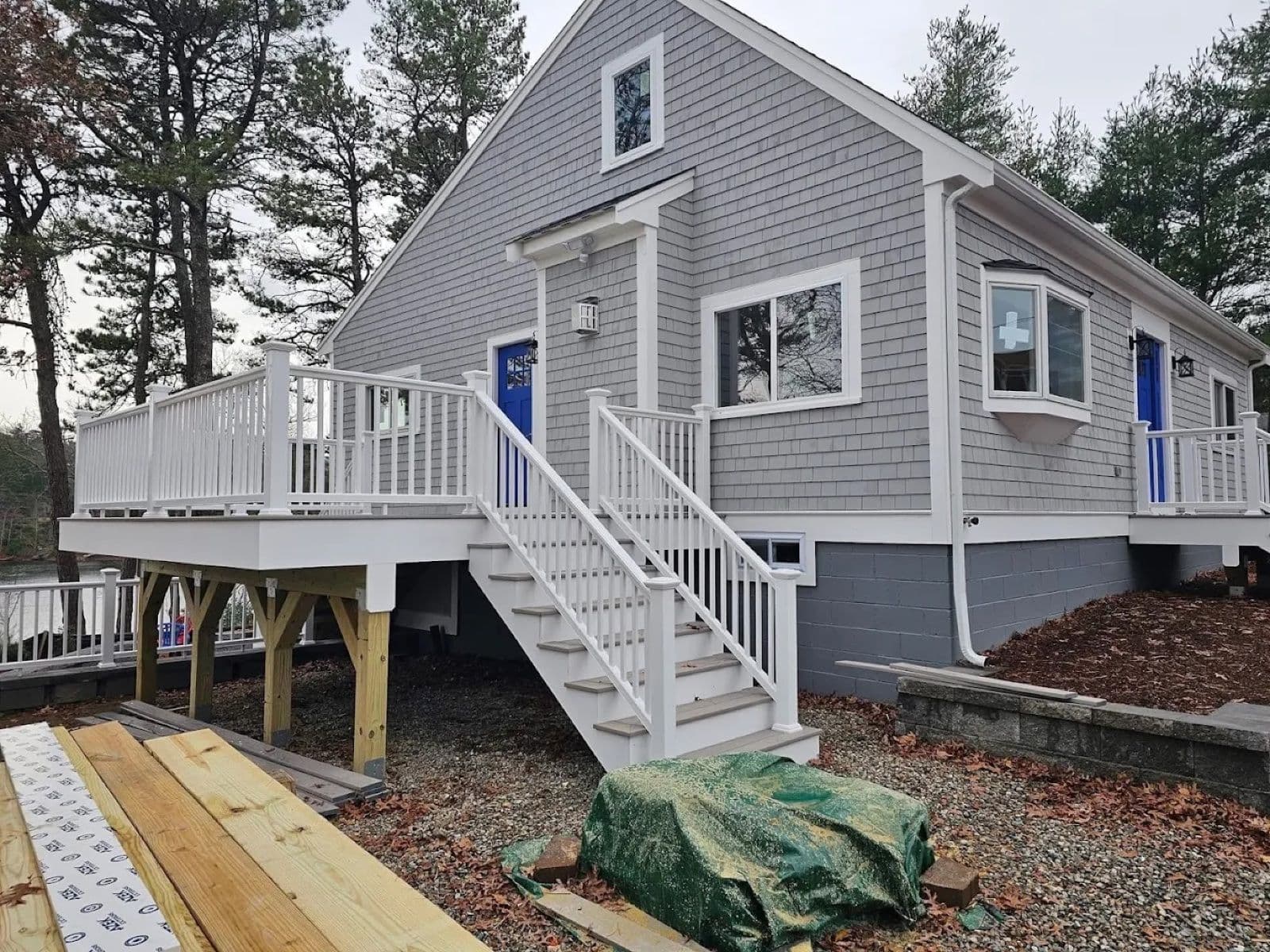
Siding installation on Cape Cod asks more of a house than the same job inland. Salt air works on fasteners, nor'easters push rain sideways under laps and around windows, summer sun bakes south walls, and winter freeze-thaw cycles find any trapped water. Below we compare the materials homeowners here actually choose, then walk through the installation details that decide how long any of them last.
We are Murray Construction, an owner-operated general contractor based in Sandwich. John Murray is personally on every project we take on, siding included.
What is the best siding for Cape Cod weather?
No single material wins everywhere. White cedar shingles suit a traditional Cape and weather to silver on their own, vinyl is the cheapest to keep up, fiber cement shrugs off rot and holds paint, and engineered wood gives a painted-wood look at less weight. In practice, how the wall behind the siding is built matters more than which of these you pick.
Many siding failures on the Cape come down to water management rather than the material itself: missing flashing over a window, housewrap that was torn and never patched, trim installed tight to a roof with no gap, or nails that rusted out within a few seasons near the water. Choose the material for looks, upkeep and budget, then insist on the details covered further down.
Siding installation on Cape Cod: the materials homeowners choose
White cedar shingles
Cedar shingles are the classic look here. Left unfinished, white cedar weathers to the silver-gray you see on old Capes from Sandwich to Falmouth. It naturally resists decay, and a well-installed shingle wall sheds water and dries out between storms.
- Salt air and sun: Cedar handles salt exposure well. It weathers unevenly at first, which some owners like and some do not.
- Wind-driven rain and freeze-thaw: Shingles do best when the wall behind them can dry. Shingles that stay wet, especially on shaded north walls, are the ones that cup, split or grow mildew.
- Upkeep: Expect to replace occasional split or loose shingles. If you want a stained or painted color, plan on refinishing over time.
Vinyl siding
For owners who want to stop thinking about the outside of the house, vinyl is the usual pick. It never needs painting, and modern shake and shingle profiles come closer to a cedar look than older vinyl did.
- Salt air and sun: Salt does not hurt vinyl itself. Darker colors can fade or move more on hot south and west walls.
- Wind and nor'easters: Vinyl panels are made to hang loosely so they can expand and contract. Nailed too tight, they buckle; installed carelessly, they can lift in high wind. On exposed waterfront walls, check the product's wind-load rating.
- Freeze-thaw: Vinyl does not absorb water, but it gets more brittle in deep cold and can crack if struck.
- Upkeep: Occasional washing, mainly to remove green mildew on shaded sides.
Fiber cement siding
Fiber cement is a mix of cement, sand and wood fibers, sold as clapboard, panels and shingle-style pieces. James Hardie is the best-known brand, and some makers offer lines formulated for colder, wetter climates.
- Salt air and sun: It does not rot and is not eaten by insects. Factory-finished boards hold paint well, though any painted surface eventually needs refreshing.
- Wind-driven rain and freeze-thaw: Fiber cement is durable, but cut edges and the bottom course need to be treated and kept clear of roofs, decks and soil as the manufacturer specifies.
- Upkeep: Repainting and caulk touch-ups over the years.
- Look on a traditional Cape: Painted clapboard reads as traditional, though some historic district committees have questioned fiber cement in place of wood.
Engineered wood siding
Engineered wood is made from wood strands bonded with resins and treated to resist moisture and decay. It is lighter than fiber cement, with a convincing painted-wood appearance.
- Weather and upkeep: It performs well when the paint film and edge seals stay intact, so plan on periodic painting and prompt repair of nicks.
- Coastal note: Read the manufacturer's installation and coastal-exposure guidance closely, since their warranties depend on it.
PVC and composite trim
On any house, the trim takes the worst of the weather: corner boards, window casings, water tables, fascia and rakes. Cellular PVC and composite trim do not rot, which is why many homeowners around the Cape pair them with cedar, fiber cement or vinyl. PVC expands with heat, so joints need to be glued or fastened as the maker recommends. If you are weighing similar materials for an outdoor project, our guide to composite vs. pressure-treated decking on Cape Cod covers the same salt-air trade-offs.
Cedar shingle siding vs. vinyl: which fits your Cape home?
The choice between cedar shingle siding and vinyl usually turns on three things: how the house should look, how much upkeep you will accept, and where it sits. Cedar gives the authentic weathered appearance and is often expected in historic areas, though it needs occasional repair. Vinyl costs less to maintain and never needs paint, but it looks less traditional and depends heavily on careful installation.
It helps to know whether the house is in a historic district where materials are reviewed, and whether it is a seasonal home that sits closed all winter. A house on an open bluff takes far more weather than one tucked into the pines. And be honest about how much you mind replacing a few shingles every few years.
Some owners split the difference with cedar on the street-facing front and a lower-maintenance material on less visible walls, where local rules allow it. Our siding contractor services on Cape Cod page lists the work we take on.
Installation details that matter for siding installation on Cape Cod
Good siding installation on Cape Cod is mostly about what you never see once the job is done. The layers behind the siding decide whether water that gets in can get back out.
Weather barrier and housewrap
A housewrap or other weather-resistive barrier goes over the sheathing, lapped like shingles so water runs down and out, with every tear and penetration taped. With the old siding off, a careful builder also checks the sheathing and framing for rot, especially under windows.
Flashing at windows, doors and trim
Leaks usually start at openings. Windows need a sill pan or sill flashing, properly lapped side and head flashing, and drip caps over trim. Where a roof meets a sidewall, kick-out flashing steers water away from the wall instead of into it. If you are planning new windows too, doing them with the siding lets the flashing be done right in one pass; see our window installation on Cape Cod page.
Rainscreen or drainage gap
Wind-driven rain will get behind any siding eventually. A small gap between the siding and the housewrap, created with a drainage mat or thin furring strips, lets that water drain and the back of the siding dry. Here it is especially helpful behind cedar shingles and painted materials, and many manufacturers recommend or require it in wet climates.
Stainless or hot-dipped galvanized fasteners
Within sight of salt water, cheap fasteners fail early. Stainless steel nails are the common recommendation for cedar shingles close to the ocean, and hot-dipped galvanized nails are a step down that still holds up far better than bright or electro-galvanized nails, which can rust and leave streaks down the wall. Follow the siding maker's fastener spec for other materials.
What drives siding replacement cost?
Siding replacement cost depends on the size and shape of the walls, the material you choose, how many old layers come off, what repairs turn up underneath, and how much trim and flashing work the job needs. Nobody can give you a real number without walking the house and putting a quote in writing.
The main cost drivers on a typical job:
- Wall area and complexity: Dormers, gables, bump-outs and second-story walls mean more cutting, staging and time.
- Material and finish: Cedar, vinyl, fiber cement and engineered wood differ in material price, labor and whether painting is part of the job.
- Tear-off and disposal: Older Capes sometimes have two or three layers of siding to remove.
- Hidden repairs: Rotted sheathing, sill plates or window framing found once the old siding is off.
- Trim, flashing and windows: New PVC trim, window flashing upgrades or window replacement done at the same time.
- Rainscreen and insulation: Adding a drainage gap or rigid insulation changes trim depths around windows and doors.
- Older homes: In houses built before 1978, work that disturbs painted surfaces falls under lead-safe renovation rules, which add steps.
- Approvals and access: Historic review, tight lots and seasonal scheduling.
Do you need approval to change siding on Cape Cod?
Often, yes, at least in some areas. Many homes north of Route 6 sit in the Old King's Highway Regional Historic District, where a local committee reviews exterior changes, including materials and color. Most towns also have their own permit rules. Check with your town before ordering material.
The Old King's Highway district covers the area north of Route 6 from Sandwich to Orleans, and each town has its own committee that reviews applications for exterior changes, looking at design, texture, materials and color. Some other Cape villages have local historic districts of their own. Your town's building department can tell you whether a siding job needs a permit, and homes near wetlands may raise Conservation Commission questions if staging or excavation is involved.
Frequently asked questions
How long does siding installation on Cape Cod take?
It depends on the size of the house, the material, how many old layers come off and what repairs turn up underneath. Weather also plays a part, since housewrap and flashing work should not be rushed in a storm. John can give you a realistic schedule once he has seen the house and you have agreed on the scope.
What is the best siding for Cape Cod weather near the ocean?
Cedar shingles, quality vinyl, fiber cement and engineered wood can all work near the water when installed correctly. The bigger factors are corrosion-resistant fasteners, careful flashing, a drainage gap behind the siding and a material whose wind rating fits how exposed the house is.
Is cedar shingle siding vs. vinyl a big difference in upkeep?
Yes. Vinyl mostly needs an occasional wash to remove mildew. Cedar shingles left natural need little care beyond replacing the odd split or loose shingle, but stained or painted cedar needs refinishing over time. Cedar on shaded, damp walls also needs more attention than cedar in full sun and breeze.
What affects siding replacement cost the most?
Wall area and complexity, material choice, tear-off of old layers, and repairs to sheathing or framing found underneath usually matter most. Trim upgrades, window work, rainscreen details and lead-safe practices in older homes also add to the scope. An on-site visit and written quote from Murray Construction is how you get a real number.
Can new siding go over old siding?
Sometimes it is allowed, but removing the old siding is usually the better choice. Taking it off lets you see and fix rot, install a proper weather barrier and flash windows correctly. Covering old siding can hide water damage that keeps getting worse behind the new wall.
Do I need permission to switch from cedar shingles to vinyl?
If your home is in the Old King's Highway district or another local historic district, a material change usually needs committee review before work starts. Outside those areas, check with your town's building department about permits. Confirm before you order any material.
Is fall or winter a bad time to replace siding?
Siding can be installed in much of the year, but some materials, caulks and paints have temperature limits, and vinyl is more brittle in deep cold. Spring and fall are often a practical window here, and a careful builder plans the work around the material and the forecast.
Talk to Murray Construction about your siding
If your siding is cupped, cracked, streaked with rust or letting water in around the windows, John can come look at the house and talk through materials that suit it and your town's rules. Visit our Cape Cod siding services, call (508) 648-3215, or reach us through the contact page.